Work in progress
Recreating the ThinkPad 701C Butterfly Keyboard
I’m recreating the sliding mechanism of the IBM ThinkPad 701C butterfly keyboard with 3D-printed parts. The goal is a keyboard that packs into a compact space, then moves into a wider typing layout.
Starting with the mechanism
The appeal is the movement itself. Two keyboard sections need to travel along coordinated paths, clearing one another before coming together in the typing position. My aim is to have opening and closing the lid drive that motion.
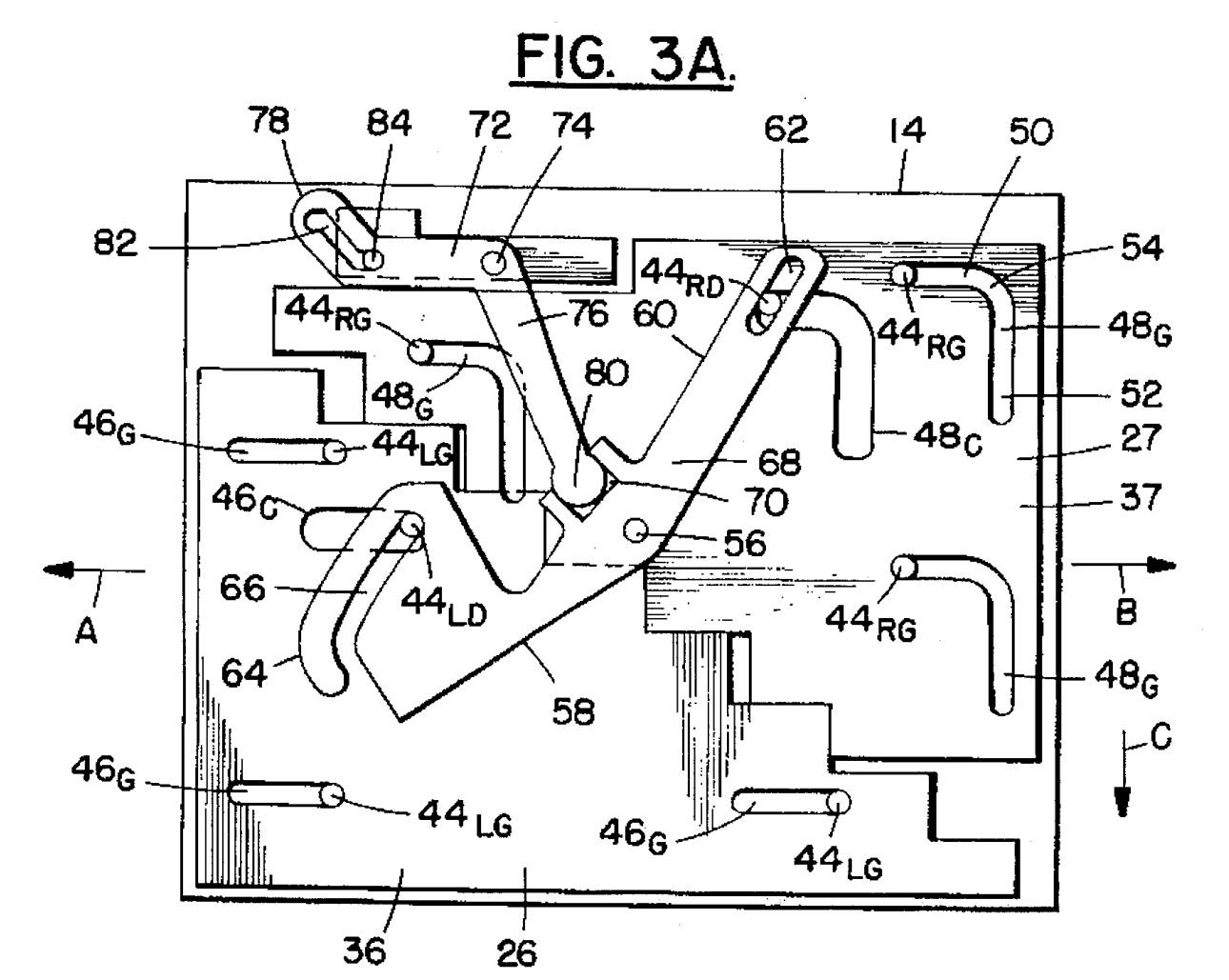
The original patent provides a starting point for understanding the sequence. Figure 3A shows the guide slots and drive arms in the compact position; the following figures show how the mechanism progresses toward the extended position.
From a drawing to printed parts
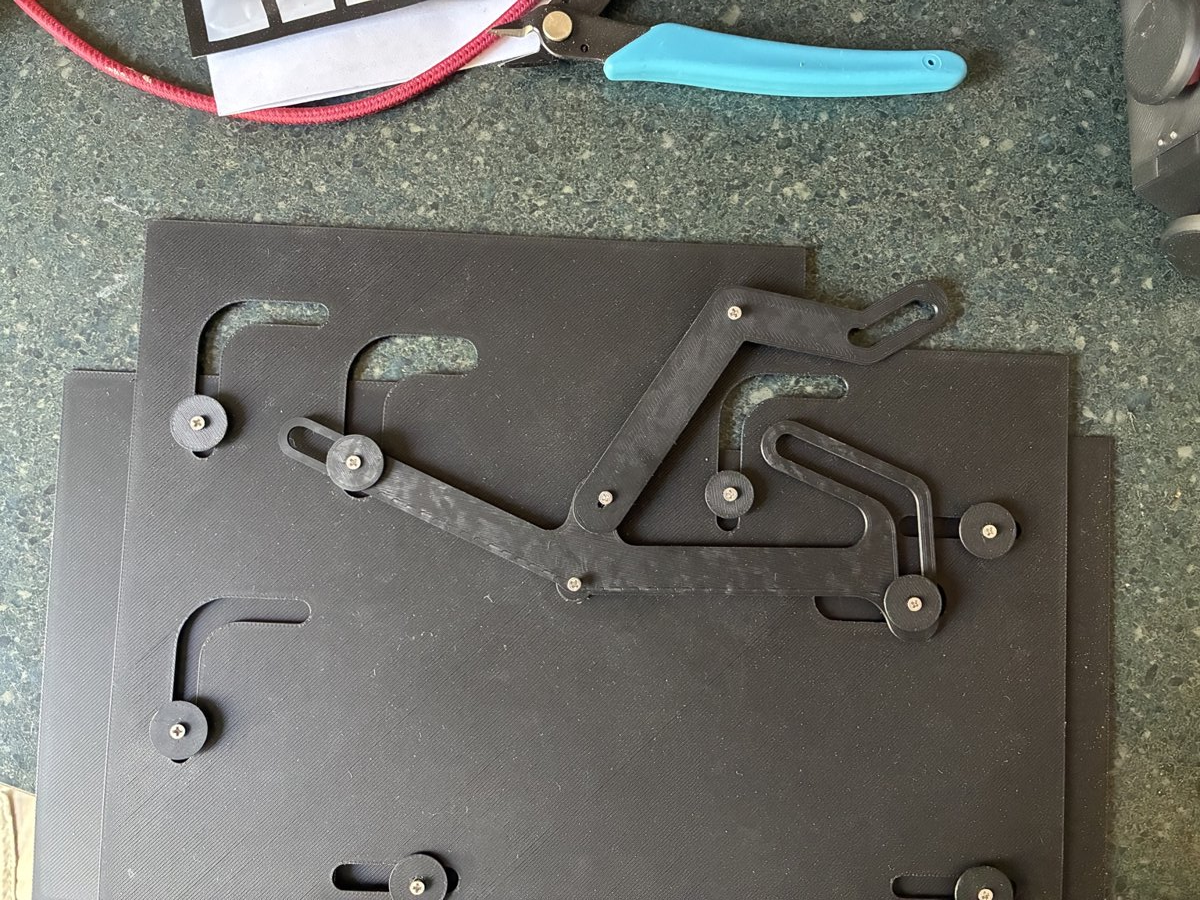
Turning the mechanism into something printable means working through the guide paths, lever shapes, pivot locations, and the space between the moving layers. A model on a screen is useful, but the printed assembly makes the fit and clearances tangible.
The current work is on that mechanical prototype: reducing vertical play, checking that the pins and levers clear one another, and refining how the pieces sit together through their travel.
What’s next
The mechanism comes first. The keyboard electronics, display, and final enclosure are later stages toward a compact computer built around the expanding keyboard. This page will follow the build as those parts come together.
The original patent
U.S. Patent 5,543,787: “Keyboard with translating sections”, by John P. Karidis, Michael P. Goldowsky, and Gerard McVicker, originally assigned to IBM and issued August 6, 1996. The drawing above is Figure 3A from that patent.